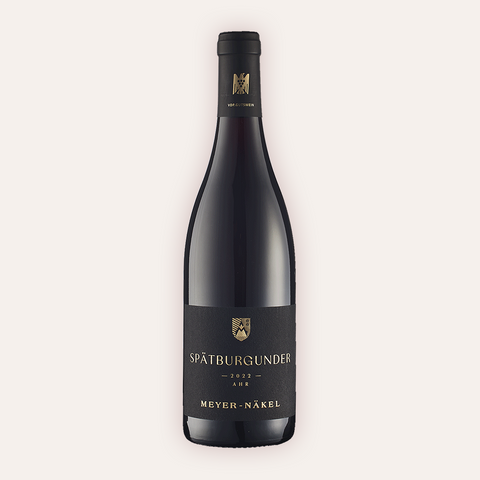
The Ahr region is unique among German wine-growing regions because, unlike in the rest of Germany, the red Pinot Noir varieties Frühburgunder and Spätburgunder dominate here. The secret of Ahr wines lies in a perfect microclimate created by the geological conditions. The steep, south-facing vineyards offer optimal sun exposure. The predominant weathered soils of slate and greywacke heat up easily and retain this warmth. Thus, the narrow valley, sheltered by the Eifel mountains, warms up quickly, providing the vines with an ideal environment.
Pinot Noir (or Spätburgunder) is the world's most popular red wine grape variety thanks to its adaptability to different flavor profiles. However, this sensitive grape demands specific growing conditions and requires the winemaker to possess all their knowledge and expertise. The labor-intensive steep slopes of the Ahr region offer ideal conditions for coaxing a balanced combination of color, fruit, and Burgundy bouquet from this grape. Only a long ripening period on the vine allows for the typical aromatics and elegant acidity and tannin structure. The slate soils of the Ahr region impart a distinctive minerality to the Pinot Noir, making it truly unique.